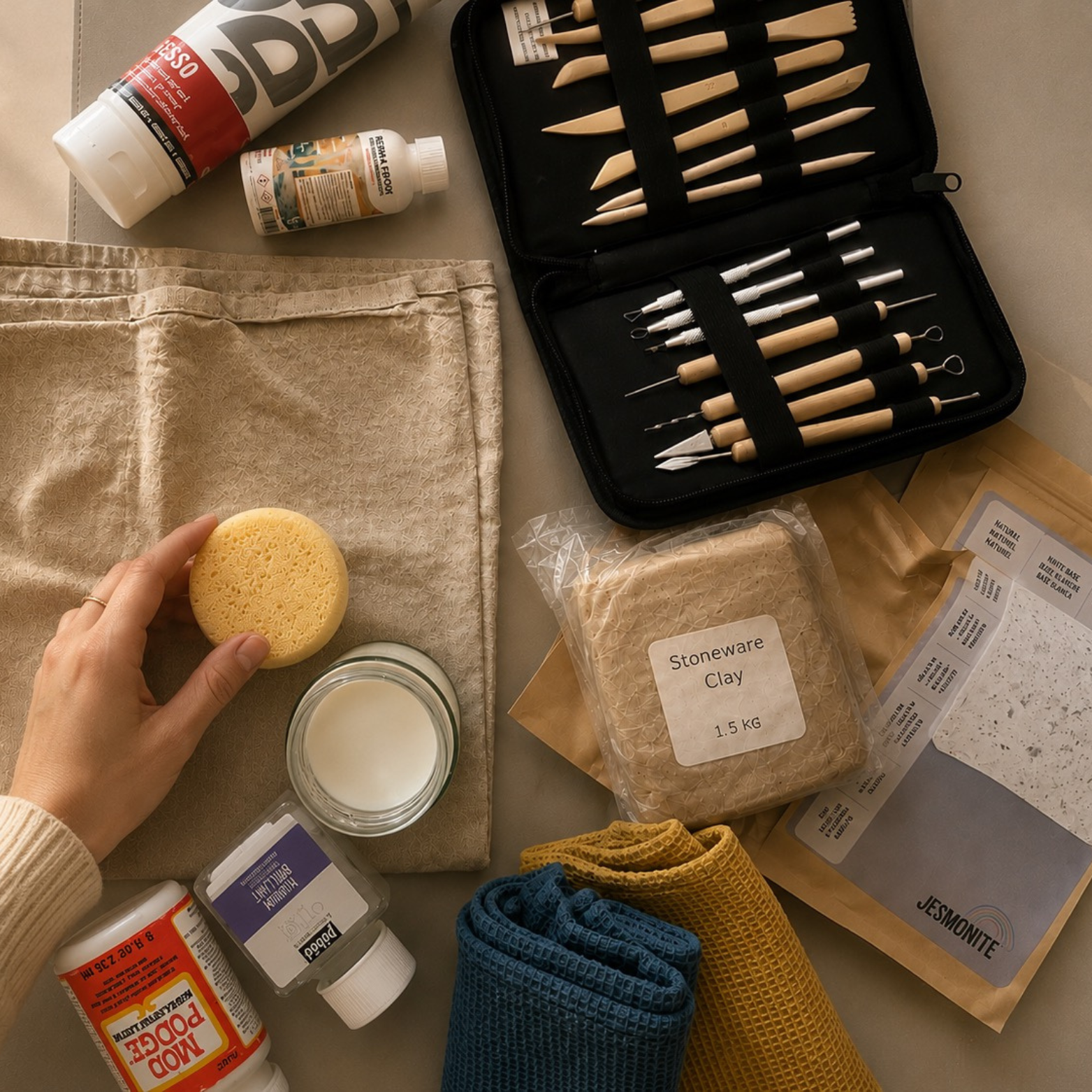
From the Therapy Cabinet — Part Three: The Pottery Basket
Clay is forgiving.
Those words have stayed with me for years.
During my time as a psychology assistant and trainee psychotherapist, I had the privilege of accompanying children who had experienced loss or illness within their families during pottery sessions.
One day, the pottery instructor said something very simple that struck me deeply: “Clay is forgiving. If you make a mistake, you can fix it.”
You can reshape it.
Smooth it over.
Add a little more.
Begin again.
Perhaps that is part of what makes working with clay so special in a therapeutic space.
There is room to experiment without needing to get it right the first time.
Something can collapse and be rebuilt.
A mark can become part of something new.
What did not turn out as expected does not necessarily have to be thrown away.
For a child navigating experiences that cannot simply be undone, there was something powerful in that.
And I think there still is ... for all of us.
Clay gives our hands somewhere to place what words may not yet know how to hold. It invites us to slow down, feel, create, change our minds, and try again.
Not everything can be fixed as easily as clay, of course.
But perhaps clay can remind us that an imperfection does not always mean the end of something.
Sometimes, it can simply become part of what we create next.