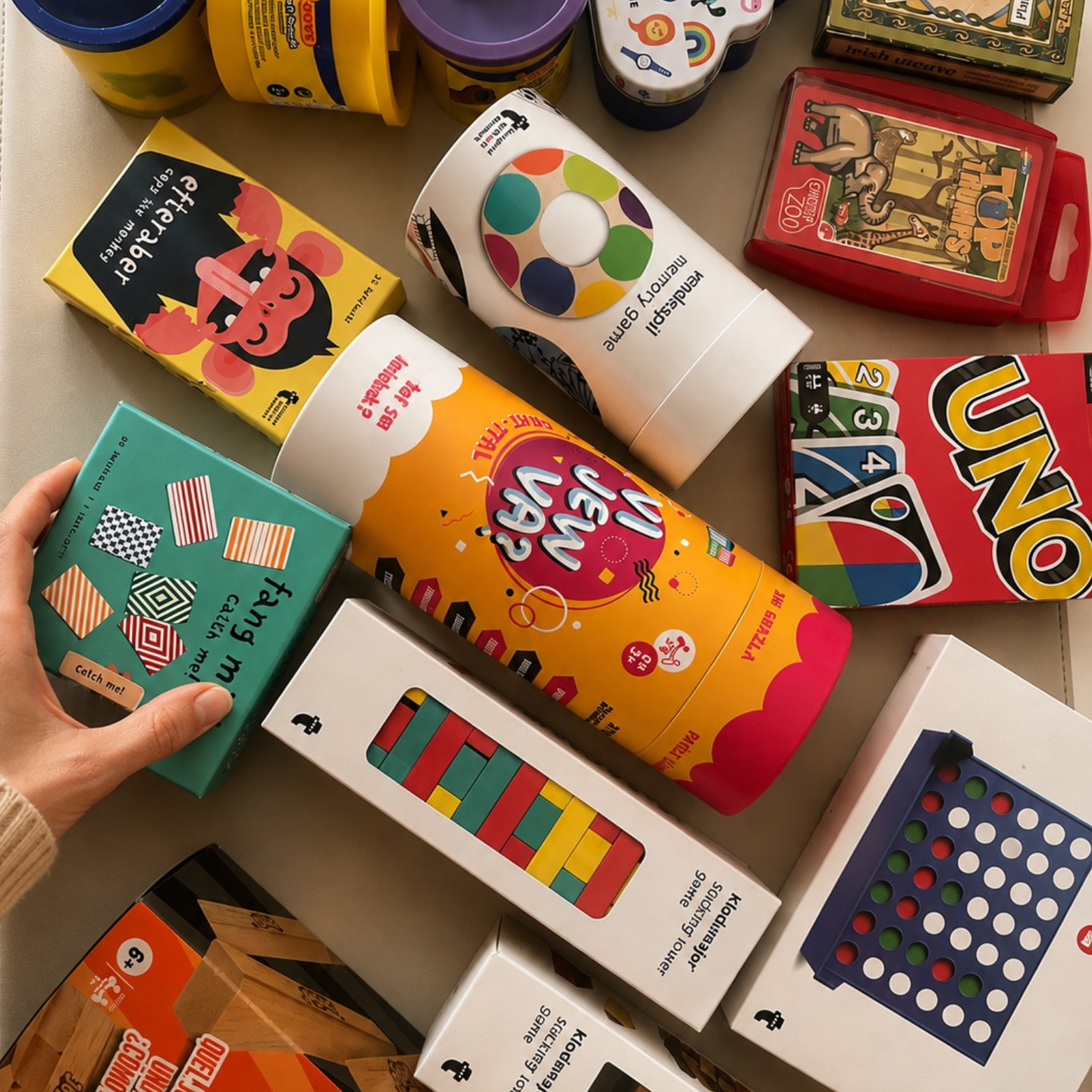
From the Therapy Cabinet — Part Five: The Play Basket
Play is often thought of as something we leave behind in childhood.
But in the therapy room, play can become another way of communicating, exploring, and connecting.
For children, play can offer a language when words are not quite enough.
Through games, imagination, choice, winning, losing, taking turns and simply having fun, there can be opportunities to express feelings, explore relationships and experience connection in a way that feels natural and safe.
And play does not stop being meaningful when we become adults.
Sometimes, inviting an adult to play opens a very different door.
It can bring us into contact with parts of ourselves that have become quieter over the years ... spontaneity, curiosity, competitiveness, silliness, frustration, joy.
Sometimes it brings us closer to the child we once were, and to the experiences, needs and feelings that child may still carry.
A simple game can tell us a surprising amount about ourselves:
How does it feel to lose?
Can I let myself be playful?
Do I need to get it right?
What happens when I don’t know what comes next?
Can I allow myself to simply enjoy something?
In therapy, play does not always need to have an obvious purpose.
Sometimes the therapeutic moment is simply in feeling safe enough to be playful again.
And perhaps, every now and then, adulthood needs a little permission to make room for that.